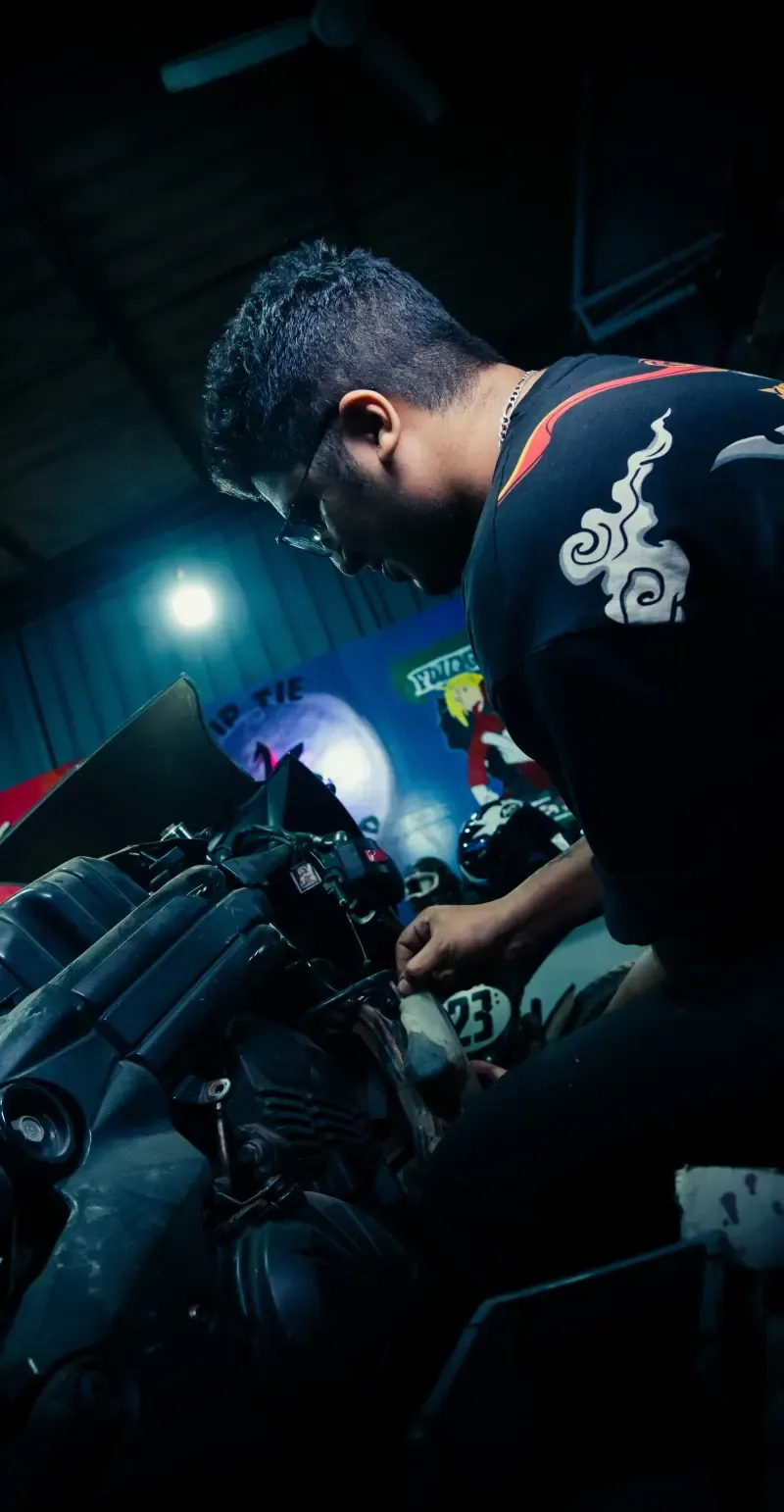
What a motorcycle service conversation covers
The workshop needs the vehicle story before it can decide what should be inspected, maintained or diagnosed.
Share the make, model, year, current mileage, last known service and any recent change in sound, feel, starting, braking, heat, vibration, fuel use or warning indication. If the complaint appears only when cold, after a long ride, in traffic or at a certain speed, include that context. It is often more useful than naming a replacement part before the bike has been checked.
Routine work can include visible condition checks, fluids, brakes, tyres, chain or relevant drivetrain care, controls, lights, leaks and general ride-readiness. The final scope depends on the manufacturer schedule, service history and what the inspection shows. LS Customs does not present a universal checklist as a substitute for model-specific requirements.
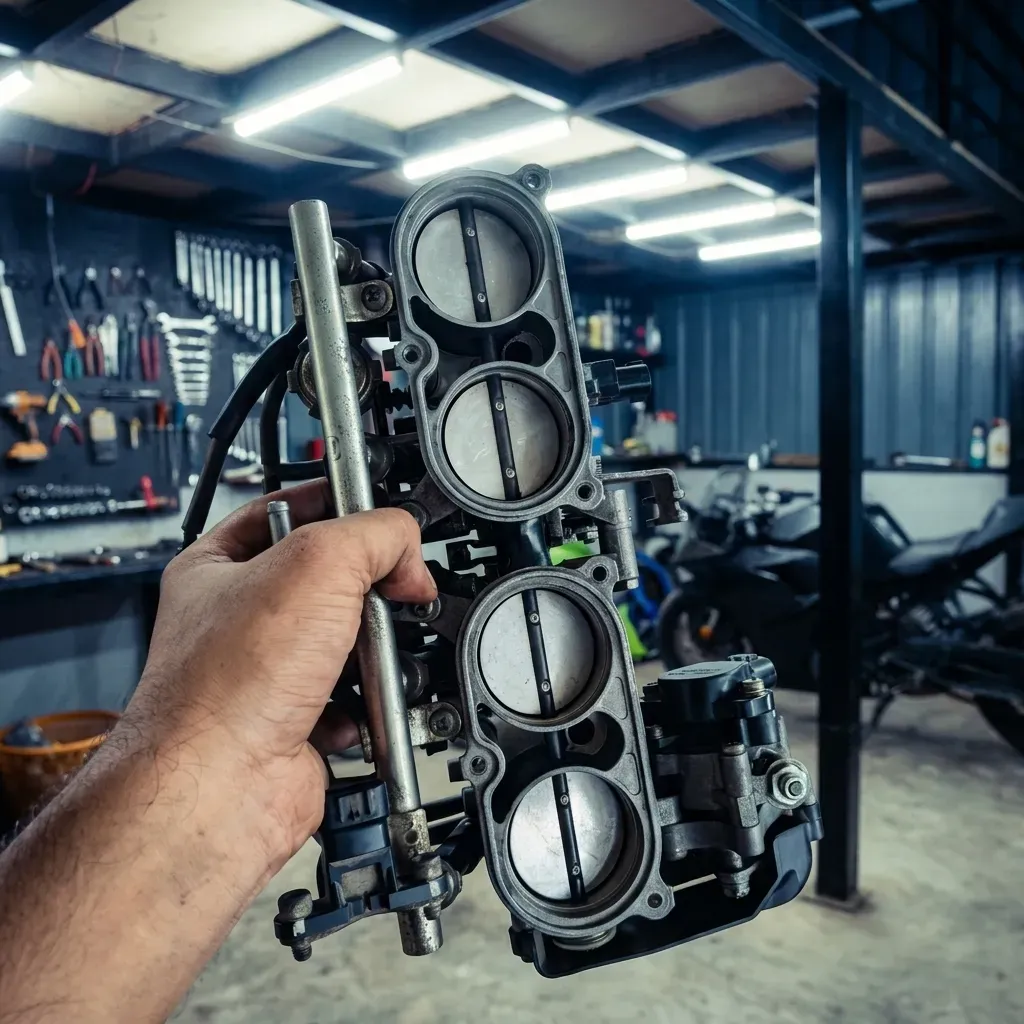
What to send before you book
A short WhatsApp brief can help LS Customs decide whether the vehicle should be ridden in, transported or inspected at a particular time. It does not replace a physical inspection, but it reduces uncertainty and lets the workshop identify information or parts that may be needed.
For a recurring fault, record when it happens and whether the motorcycle returns to normal after cooling, restarting or changing load. Photographs or a short video can add context, but do not take a photo or operate a phone while riding. If the bike has a serious brake, tyre, leak, steering or control concern, avoid assuming it is safe merely because it still moves.
- Vehicle make, model, year and registration variant where relevant.
- Current mileage and the date or mileage of the previous service.
- Exact symptom, when it began and the conditions that reproduce it.
- Recent work, accident damage or aftermarket electrical/mechanical changes.
- Your preferred visit or drop-off window and any genuine deadline.
Inspection, approval, work and handover
At intake, the reported issue and requested maintenance are recorded. The workshop inspects the relevant systems and separates the approved job from observations that may need attention later. If the scope changes because access reveals another problem or a part is unavailable, the next step should be confirmed rather than silently assumed.
After the agreed work, LS Customs performs relevant function and visible-condition checks and explains the handover notes. A service cannot guarantee that an unrelated component will never fail, so riders should retain the invoice or job record, follow model-specific maintenance guidance and report a returning symptom with the conditions in which it appears.
| Step | Purpose | Rider input |
|---|---|---|
| Intake | Record history, request and symptoms | Accurate mileage, recent work and usage |
| Inspection | Identify condition and dependencies | Permission for agreed diagnostic scope |
| Approval | Confirm priorities, parts and estimate | Accept, stage or decline optional work |
| Handover | Explain completed work and observations | Ask questions and retain the job record |
Why service price and turnaround vary
A service label does not reveal access time, consumables, replacement parts or the condition created by missed maintenance or earlier work. Two motorcycles with the same model and mileage can need different scopes. LS Customs therefore confirms the estimate after understanding the vehicle and distinguishes inspection or labour from parts where the job requires it.
Completion time depends on the approved work, parts availability and what is found after access. Do not plan a long ride immediately around an unconfirmed estimate. If timing is critical, say so before drop-off and wait for the workshop to confirm what is realistic.
After the motorcycle leaves the workshop
Pay attention to the systems that were discussed at handover and follow any check-back instruction. If a symptom returns, note mileage, temperature, riding condition and whether it is identical to the original complaint. That information makes a follow-up much more useful than a general statement that the bike “feels different.”
For riders who want more confidence between services, LS Customs also offers 1:1 and group motorcycle maintenance training. The training covers practical pre-ride observation and when to involve a workshop; it is not a replacement for qualified repair work or a model’s service manual.