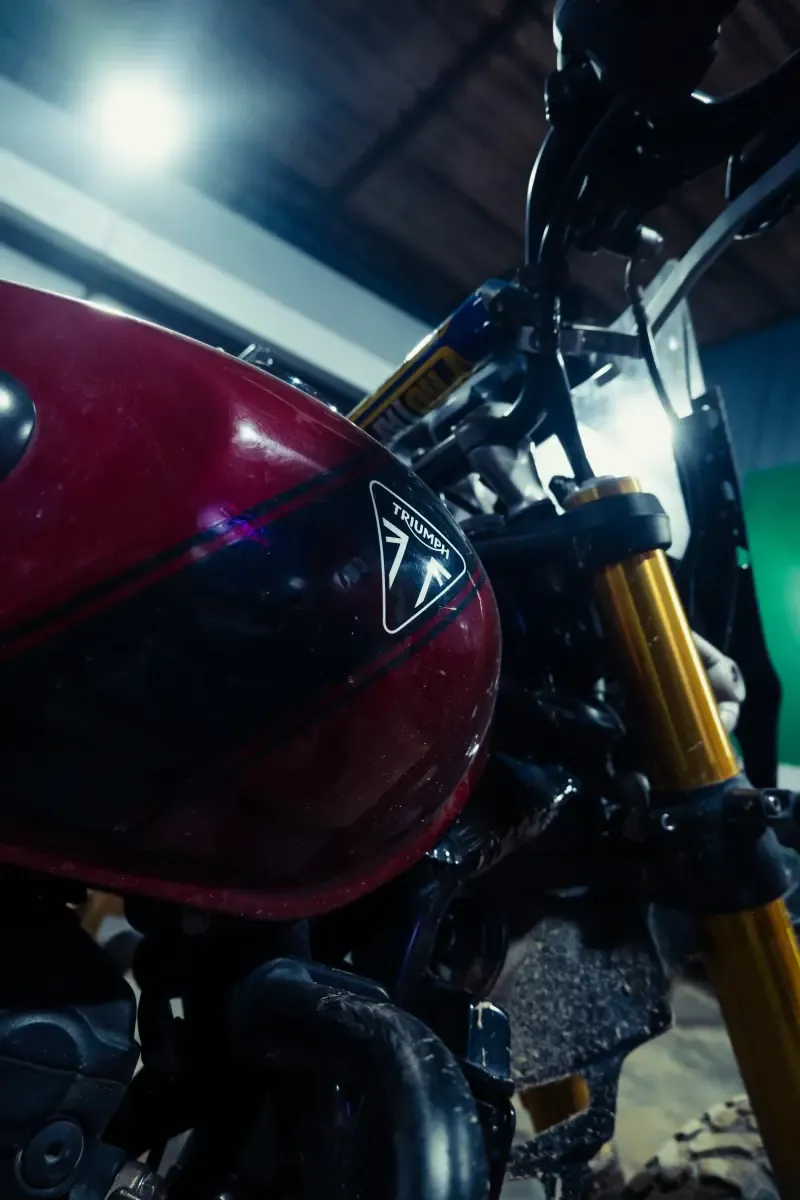
What LS Customs fabrication work can solve
Fabrication begins when an off-the-shelf part does not solve the fit, layout or finish problem responsibly.
Common conversations include number-plate and tail tidy brackets, indicator or lighting mounts, custom plates, hardware interfaces and one-off solutions that support a larger motorcycle modification. The workshop may also adapt a design for repeat supplier production after the part and fitment assumptions have been validated.
Not every request should become a fabricated part. Sometimes the safer or more maintainable answer is a supported replacement, a different mounting location or no change at all. Inspection helps determine whether the surrounding motorcycle can support the proposed outcome without creating a new clearance, wiring or service problem.
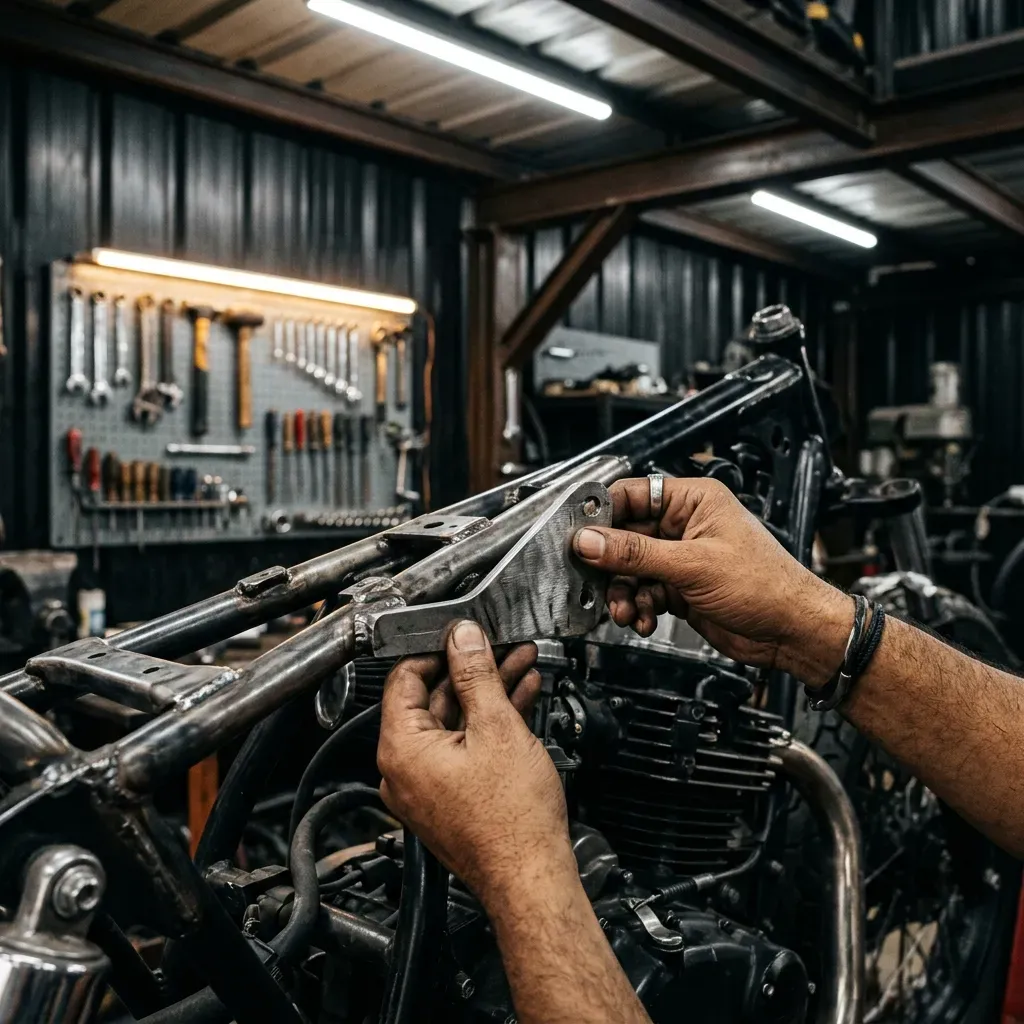
Information needed before design or fabrication
Provide the bike make, model, year, existing modifications and the exact component or problem. A reference image communicates visual intent but does not prove that the same geometry or material is suitable for another motorcycle. LS Customs measures the actual fitment environment and identifies the interfaces that control the design.
The intended quantity also matters. A one-off workshop part, a prototype for later testing and a repeat production part involve different documentation and supplier decisions. LS Customs designs its modification parts and outsources production to specialist suppliers, retaining fitment validation and final quality checks for the LS Customs product scope.
- The component being mounted and its verified dimensions or sample.
- Relevant movement, tyre, suspension, heat and bodywork clearances.
- Fastener locations, access requirements and expected service removal.
- Finish preference and the environment in which the bike is used.
- One-off, prototype or repeat-production intent.
Measure, mock up, produce and validate
The process can include physical measurement, a basic mock-up, design refinement, fabrication or supplier production, trial fit, finish and final installation. The exact sequence depends on the part. A simple bracket may not need the same development loop as a model-specific product intended for multiple motorcycles.
CNC machining is a production capability, not a promise that every component should be CNC-machined. Welding, cutting, bending, machining, purchased hardware and finishing are selected around the approved job. The quote should name the planned method closely enough for the customer to understand what is being supplied, without pretending that an untested concept already has production evidence.
| Phase | Decision | Evidence before moving on |
|---|---|---|
| Measure | Interfaces and available space | Bike or reliable physical reference |
| Mock-up | Position, access and visual proportion | Physical check of the intended layout |
| Produce | Method, material, hardware and finish | Approved scope and supplier requirement |
| Validate | Fit, function and presentation | Trial fit and final workshop checks |
Materials, tolerances and structural boundaries
This page deliberately avoids claiming a universal material, tolerance or load rating. Those values depend on the function, geometry, production process and evidence available for the project. Decorative, mounting and structural requests must not be treated as interchangeable simply because they can be made from metal.
A request that affects the frame, steering, suspension, braking, wheel, restraint or another safety-critical system needs a higher evidence threshold and may fall outside the accepted scope. LS Customs will identify what it can assess and what requires a different specialist, approval route or manufacturer information.
What shapes a fabrication quote
Cost can include inspection, measurement, design time, mock-up, material, purchased hardware, supplier setup, production, finishing, trial fit and installation. Small quantity does not always mean low cost because the first part carries the problem-solving and setup work. Repeat quantity does not automatically mean the design is ready for production; it must first be validated.
Turnaround depends on access to the motorcycle, design decisions, supplier queue, material and finish. Send the best available information for an initial discussion, then expect a physical check before a bike-specific one-off is represented as confirmed.